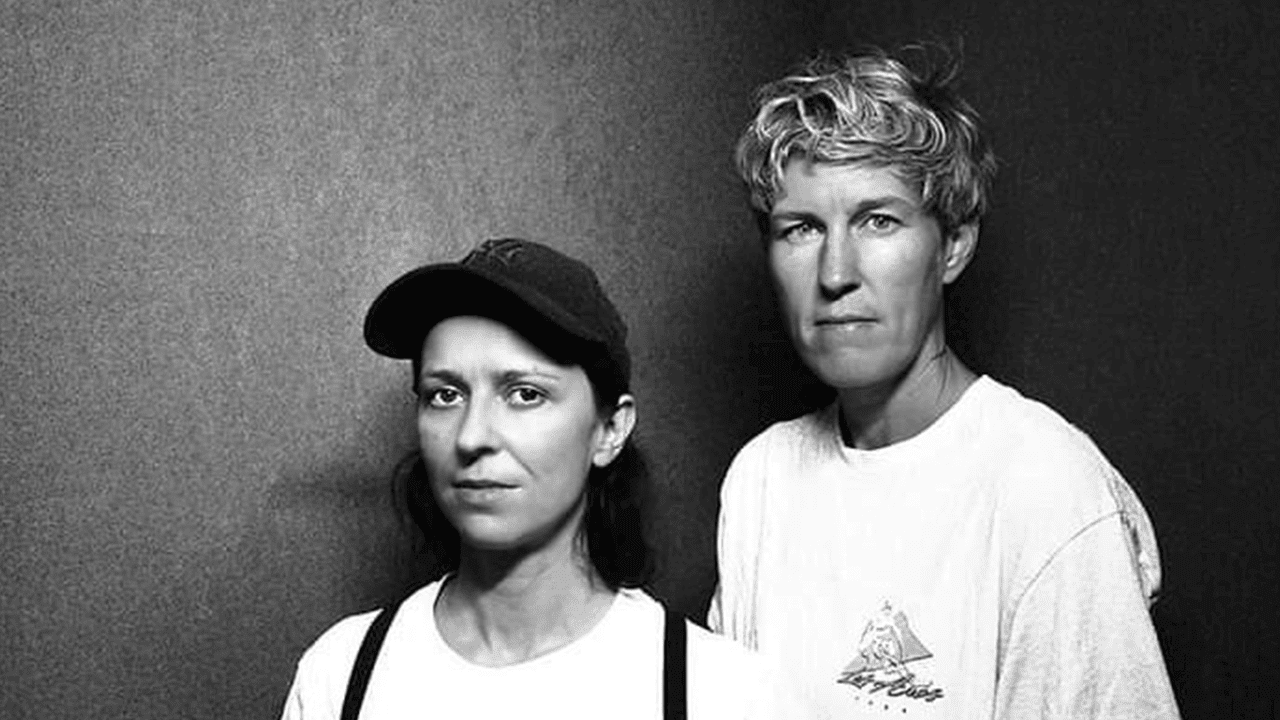
Tomboy Lab, the Strength of Instinct
For six years, IDOL has been supporting Tomboy Lab, a development unit for emerging artists. Melissa Phulpin and Maÿlis Pioux break down the “sonic activism” they apply daily, supporting projects that the industry doesn’t always grasp, and letting themselves be guided by what is paramount; the emotion of a voice, a song, a sonic signature.
In this interview, we also get insight into their concrete approach to artist development, conceived as a toolkit that adapts to each trajectory: on-the-ground scouting, value alignment, and collective construction of a strategy, centered around releases and public speaking.
Tomboy Lab also reveals what happens behind the scenes: how collaborations are born, through daily monitoring, meetings, and mutual crushes, and then how support is built over time, as close as possible to artists needs, without ever dispossessing them of their decisions.
Can you explain the concept of sonic activism?
It’s the idea of supporting projects that the music industry wouldn’t necessarily rush to immediately. It’s defending projects, whether they are sometimes “difficult” to access, whether they are supposedly “niche”or, on the contrary, “mainstream” in vocation. That’s not what guides us: what guides us is the musical/sonic attraction to a song, a voice (often women, as it happens), a set of songs, it’s the sound that touches us above all.
Ultimately, we have almost no other initial goal than “to help these songs exist.” It stems from a sensibility, and it has undoubtedly become an artistic direction.
How was Tomboy Lab born?
We founded Tomboy Lab together 15 years ago; back then it was a label hosted by Sony Music / Un Plan Simple – they had come looking for Melissa to set up a development unit. After 2 years under this configuration, Tomboy Lab regained its independence, and it is still Melissa’s structure, sometimes as an editor, consultant, promo manager, programmer…
Since then, we very often call upon each other to collaborate on our projects because Maÿlis is an artist manager. There is no systematic approach, except for the fact that we like working together! This is particularly the case for the “distrib” part of Tomboy Lab, where Maÿlis handles distribution advice and strategy. Melissa mainly handles the promotion part, and sometimes editing. But the roles are porous; the idea is to move projects forward.
How long have you been working with each of these artists that IDOL defends?
We’ve had a distribution deal with IDOL for six years. In 2018, for example, we distributed Clara Ysé’s first EP “Le monde s’est dédoublé” (“The world has doubled”), while for the last 4 artists we’ve distributed, we have been working together for 2 years on average. The goal is to be able to release first singles, a first EP, to support them in this start. We are a resource for accompaniment, advice, promotion, and distribution, of course.
I (Melissa) have known Pascal since V2 music; he was a marketing director back then. He told me about his IDOL project very early on; I even visited the Rue Messager premises when there were only 2 or 3 of them max. We also have a South-West connection (Maÿlis too!), when I lived in the South, I saw him a lot on the train to Paris and at L’Atabal in Biarritz.
It is often the first step of visibility for these artists. Before they have the opportunity to have concrete initial contact with labels, we offer them a distribution solution and professional support. But the artists remain producers of their works in our ecosystem. They remain the main decision-makers.
How does a collaboration with an artist begin?
There are several scenarios. We do scouting, almost daily musical monitoring, then we travel to festivals, talent showcases… And we also receive many direct proposals. We adapt to the needs of each person and the pre-existing ecosystem when there is one.
The motivation is the music, the artistic side, being touched by songs, a voice, melodies, a personality. And what matters is also being aligned on a human level. On shared values and then obviously on the strategy, the planning we define together. We exchange. We share. It’s a common state of mind, a desire to do things together.
How do you support these artists throughout their journey? Do you intervene right from the creation phase?
It depends on the needs and the progress of the project. When we distribute a project, we often intervene right from the demo stage, having in-depth discussions on the artistic side. But again, the artists remain their own producers, and they are quite autonomous on the recording part.
We analyze the project from all aspects, then we jointly elaborate release schedules and a global strategy. We can help search for partners. We offer opinions and advice, if necessary, at every level, including live performance and promotion, of course. Because the life of a distributed track is closely linked to the rest of the environment put in place.
Specifically on the distribution part, we work on optimizing the release schedule, the choice of tracks, the choice of visuals, and on elaborating the pitch, of course, which we share with our dedicated project managers integrated into IDOL, with whom we collaborate closely upstream and downstream of each release.
In parallel with these single, EP and/or album releases, for some artists, the challenge will be to find partners for the tour, a label, find Parisian dates, etc… But also to expand their catalog of tracks, and especially to develop their communities: whether it’s their listeners on DSPs, followers on social networks, or the audience that will attend concerts… And of course, for that, promotion with journalists must be ensured, which Melissa generally does.
What are the main challenges encountered in the development of an emerging project?
The most complicated thing remains to get projects that are not at all identified yet, noticed by platform editors. Helping artists find their place in the media, which is becoming increasingly long and difficult. You have to find the right angles, the right pitches. You have to find ways to make people discover and take an interest in the project.
We have a few privileged contacts with platform editors, met during our respective careers. These are people with whom we have kept in touch probably also because we are sensitive to similar aesthetics: naturally, we will meet again at a concert or event. And that is also part of our strength: in parallel with the expert work of IDOL, we sometimes manage to speak directly to these editors, sometimes we achieve that little extra and obtain additional playlists ourselves.
On which aspects of an artist's career does Tomboy Lab's support make a difference?
There is something very connected to personality, to the human aspect, to the artisanal side. A kind of proximity, an intuition, a conviction that must be strong enough to bring other partners on board. Feeling capable of moving mountains.
There is a time for shared reflection and regular exchanges with the artists. To build together: because everything starts with them. We then try to translate, to optimize, to save time at different scales, to accompany them and help the story grow.
We clearly need to enjoy it, share a common desire, and invent together. That's how it works best.
How do you approach the issue of artists' visibility on social networks and in the media? And mental health in relation to this pressure?
Regarding social networks, we discuss their wishes above all. Depending on their autonomy, we guide them and define schedules with them. They remain masters of their networks and what they wish to post. Concerning the media, Melissa does the promo work for each single release, each EP, album… Singles remain more complicated to highlight, placements are rare, but that is precisely the whole point of finding the right words, the angles to try to defend them as best as possible.
Regarding their mental health, we remain vigilant throughout our exchanges with them. We try to detect moments of downturn or stress, and we adapt our requests in a somewhat innate way. We try to forge a bond of trust and benevolence, which should normally allow them to express their difficulties, their incapacities in this or that area. We also discuss it among ourselves; that’s the importance of being two; we often have complementary sensibilities or analyses that allow us to adjust strategies.
However, we are not mental health specialists. And if necessary, we direct them to a psychological solution as soon as we perceive that it is important. And we talk about it less, but we must also look after our own mental health as well.
What makes you particularly proud in this role?
When we observe that things are concretely moving forward following all the actions we have implemented or participated in implementing. When a track finds its audience, its media, and then an additional partner takes a position. Or, quite simply, when we get emotional feedback from people who have listened to these tracks!
Can you share an anecdote about Tomboy Lab?
We extend our profession by being “DJs” under the name The MM.X.. It’s another way to introduce music (okay, we also play Rihanna, admittedly :D) to potential new listeners. And a way for us to share music, to challenge ourselves, and to make people dance/smile. Joy 🙂