Job of the Month #29: Director of Insights
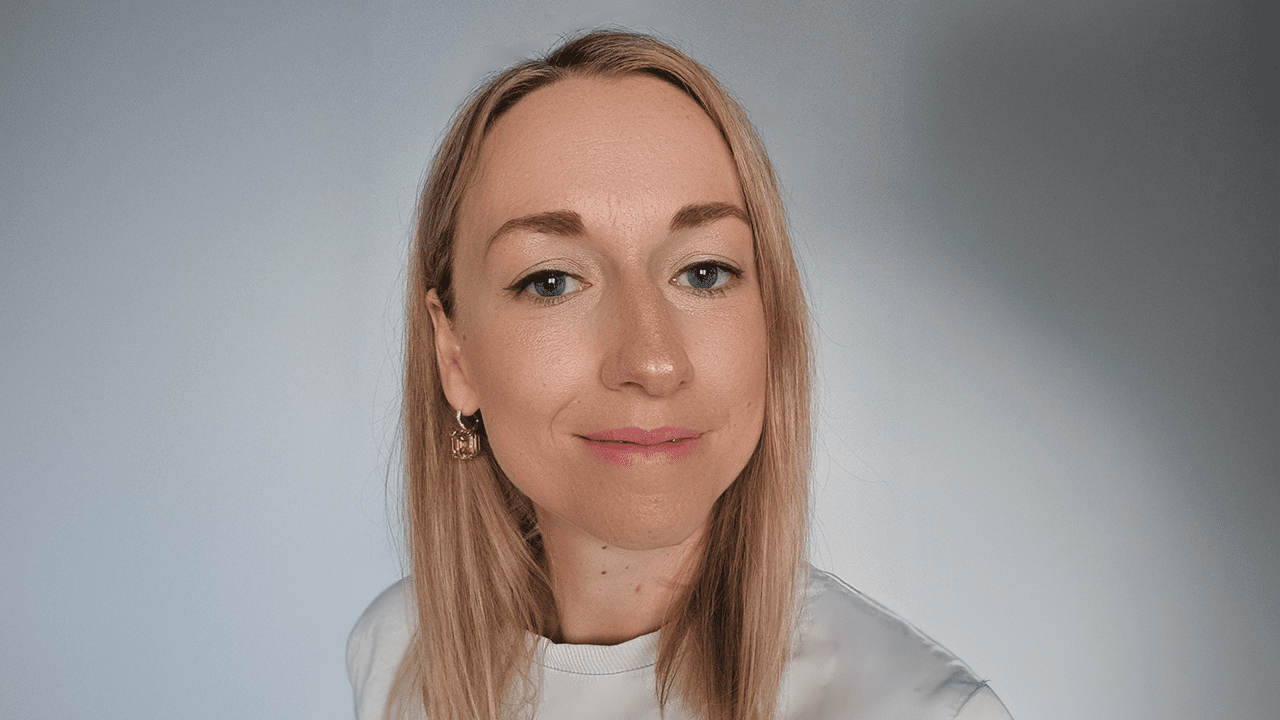
Each month, IDOL presents a job in the music industry. Or more than a job, a person! Because behind the same job title, there are significant differences from one structure to another. Each person can define the scope of his or her job according to his or her career path, qualities and skills! Meet Ivette Hubackova, who reflects on her unconventional career path and how, armed with her mathematical skills, she turned around to become Director of Insights at SNEP.
First and foremost, can you present SNEP?
Contrary to what one might think, the Snep is not a company, but the Syndicat national de l’édition phonographique (French National Union of Phonographic Publishing). Created 103 years ago, its role is based on three main pillars: defending the rights and interests of producers, promoting the recorded music industry and informing the profession via data, studies, and market analyses.
This translates into broad action, in France with public authorities and ministries but also at the European level, particularly now with political subjects like AI. The idea is to remain vigilant so that everyone’s rights are respected and to avoid reliving crises like the industry has already endured.
Concretely, what does a Director of Insights do?
I’m an analyst by training, so I’m committed to understanding data right from the source. Data can take many forms: turnover, gross sales, and especially today, sales equivalents. Previously, for certifications, we mainly talked about physical sales, and since 2016, we also integrate streaming into our tools, converting streams into sales equivalents.
I handle the entire data lifecycle. If the data is erroneous or incomplete, we need to identify the origin of the problem. Otherwise, it will be impossible for us to produce reliable economic and consumption studies.
We must be vigilant during collection, being exhaustive, with the most representative panel possible: retailers, streaming platforms, download, record stores. Then, I work on structuring, quality, and aggregation, in collaboration with our service providers, but also with the industry, because our charts and certifications have very precise rules and methodologies, and everyone must be aligned on their application.
The ultimate goal of my work is the proper communication of this data, adapted to each interlocutor. A regulator will not ask for the same thing as a media outlet or a ministry, so we adapt the interpretation, sometimes even the methodological framework, to transmit reliable and relevant information.
For example, Arcom may request information on the list of confirmed artists, which means our criteria will be sales and certifications. Conversely, the media will tend to look for historical records or trends, so we tell the figures differently, while remaining rigorous. Finally, there are also specific reports, such as those related to the guarantee of minimum remuneration which are paid by the SCPP and the SPPF, which rely on their own methodologies.
What are the qualities required for your position?
The number one quality is listening. We interact with a wide variety of people, so you need to be able to hear their needs, understand their concerns, and remain open to the difficulties that professionals in the industry may face, because the entire chain can be impacted.
For example, during Covid, vinyl manufacturers were overwhelmed with orders, and lead times were exploding. As a result, labels could no longer press records in time. Our role was to seek concrete solutions, find alternatives, such as unlocking production capacity elsewhere. That’s also what agility means: being inventive and solution-oriented.
Therefore, it also requires being available and diplomatic. We are identified as an authority on charts and certifications, so we have a duty to be educational, to explain our methodologies, and to support their evolution. We must remain open to the creativity of labels, artists, and their projects, be flexible as much as possible while enforcing common rules.
What is a typical day like for you?
In the morning, I start with team building, because it’s always good to strengthen bonds. Then, I spend time on emails, because often labels and distributors ask me if their project is compliant, and I have to inform them about any rule changes.
The claim filers are responsible: they contract with our technical service provider, which imposes quite specific requirements and methodology on them. So, I am sometimes contacted via the technical teams, sometimes directly, to find out if a certain event is eligible according to the rules, and if it can count, for example, in a ranking or a certification. Sometimes it’s a streaming platform asking me for data, or reports, notably via our Charts France platform. Often the SCPP also contacts me for precise information on data related to reports that we must deliver jointly with the SPPF.
On a daily basis, I also ensure the proper functioning of the tools we have put in place and the reliability of our systems. This involves the constant enrichment of our reference database and the supervision of our sales database. I also deal with the integration of new retailers into the OCC panel so that they can declare their sales to us, while managing the delivery of clips to the media. My role also leads me to intervene directly with the labels to respond to their technical or strategic requests. Finally, I ensure a constant link with the IFPI, our international federation, to exchange on global developments in ranking rules.
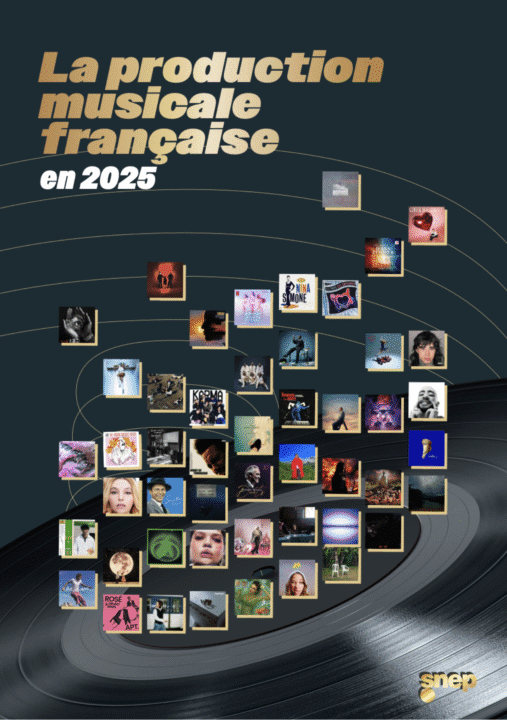
The end of the year and the first quarter are more specifically dedicated to preparing the recorded music assessment that we publish at this time. My days are then occupied with the production of reports and in-depth analyses, in close coordination with our technical teams and specialized research firms such as Ifop, Ipsos, or Kantar Media.
SNEP's 2025 Review of the Recorded Music Market
Can you tell us a little about your career path?
I am of Czech origin, I have a French high school diploma and a degree in accounting, economics, and marketing. So, numbers have never been foreign to me. I first worked as an assistant in a marketing department for a company specialized in cosmetics. I discovered how a creative team works, with an event-based dimension.
At 21, I arrived in France, and I had the chance to live with the family of a famous artist. This allowed me to observe the daily life of an artist: people coming to rehearse, songs written on the corner of a table… After a year and a half with them, I decided to continue my studies in France.
I started with a performing arts degree at the University of Évry, where I began organizing cultural events, which allowed me to gradually build a network. I then moved towards cultural management, with many internships. I notably worked for a world music festival, which also served as a label, a concert venue, and a production office. We were a small team, so I had access to a lot of information! Afterward, I worked for a local authority for two years where I was in charge of coordinating communication for their two major music festivals. And then Covid arrived, which meant no more events, and the end of my contract, just as I became a mother.
I then looked into professional training courses, and I came across the job of data analyst. I already liked digital a lot, because in my last positions, I had touched upon production, admin, logistics, and communication… I started discovering Python and SQL, and I realized that it was much more accessible than I had imagined, a bit like video games. So, I took a course via OpenClassrooms, accompanied by a mentor, but with a lot of autonomy. I recommend it.
At the end of the training, I had many interviews and signed a fixed-term contract at the Musées de Paris, replacing someone on maternity leave. And that’s where the network counts: following an interview thanks to one of my connections, my CV arrived at SNEP, where I have been for three years.
That’s it: it’s not perfect, it’s not linear, but I would say: try, meet people, do projects. Do something that suits you, that you enjoy, without forcing yourself. And something beautiful will inevitably come out of it.
What do you like about your job?
I believe what I like most is human contact. I am a curious person; I like to learn, understand the objectives, and try to see how we can collaborate to achieve them together.
What drives me is collective work and project creation: with data, we can do an enormous amount of things. I like to build something that brings the right information to the right person, so that they can then use it and create something else in turn.
Why did you choose to work for SNEP?
Working for music in this position is… the ultimate goal. As I am passionate about music, it is precious. I wake up with music, I consume it from morning to night, it’s part of my daily life.
At first, I didn’t measure the scope of the activities or the extent of the subjects. But today, I think it’s brilliant. I am in contact with a lot of players, and especially with our technical teams and our international federation, which are located in London.
So working in the French market, which is one of the most important in the world, with a global view on how music is consumed, how the market is evolving… and discussing it with my colleagues, comparing, understanding: it’s quite incredible. Frankly, it’s perfect!
What’s the strangest task you’ve done in your career?
It’s more of an anecdote, a very simple moment, last year, returning from a short trip to London to see the IFPI and our technical teams.
We arrive at Gare du Nord, we see Skread, and we ask him for a selfie, all the while keeping an eye out for Orelsan. A little further on, we run into the whole Skread Connexion, and Orelsan is there! With my colleagues, we hesitate, but I want my selfie with him. So we go up to him, we tell him we work at SNEP, and he is super nice. He tells us he’s just returned from a recording session with the London Symphony Orchestra at the famous Abbey Road Studios, and we chat really simply, almost like a friendly discussion. Honestly, it made me so happy!
Ivette's playlist
Going further
- Job of the Month #1: DSP Editorial & Partnerships Manager
- Job of the Month #2: Front-End developer
- Job of the Month #3: Head of Digital Content Operations
- Job of the Month #4 Label Manager
- Job of the Month #5: Royalties Manager
- Job of the Month #6: Head of Audience Development
- Job of the Month #7: Press Officer
- Job of the Month #8: Head of A&R / Business Development
- Job of the Month #9: Performance Marketing Manager
- Job of the Month #10: Legal Advisor
- Job of the Month #11: General Delegate
- Job of the Month #12: Global Music Editor
- Job of the Month #13: Director of Member Operations
- Job of the Month #14: Backend developer
- Job of the Month #15: President and managing director
- Job of the Month #16: Head of Partnerships
- Job of the Month #17: Head Of Sacem Lab / Innovation
- Job of the Month #18: Physical Distributor
- Job of the Month #19: Label Partner Manager
- Job of the Month #20: Entrepreneur music & tech
- Job of the Month #21: HR & admin manager
- Job of the Month #22: Membership Director
- Job of the Month #23: Community & Projects Manager
- Job of the Month #24: Artist Strategy Manager (Marketing Lead)
- Job of the month #25: Majeur·e·s Coordinator
- Job of the month #26: Artistic Director in publishing
- Job of the month #27: Serial Entrepreneuse
- Job of the month #28: International Neighbouring Rights Collection
- Job of the Month #30: Music Supervisor
- Job of the Month #31: EDI and research consultant
- Job of the Month #32: Strategic Advisor
- Job of the Month #33: Project manager and Chairwoman