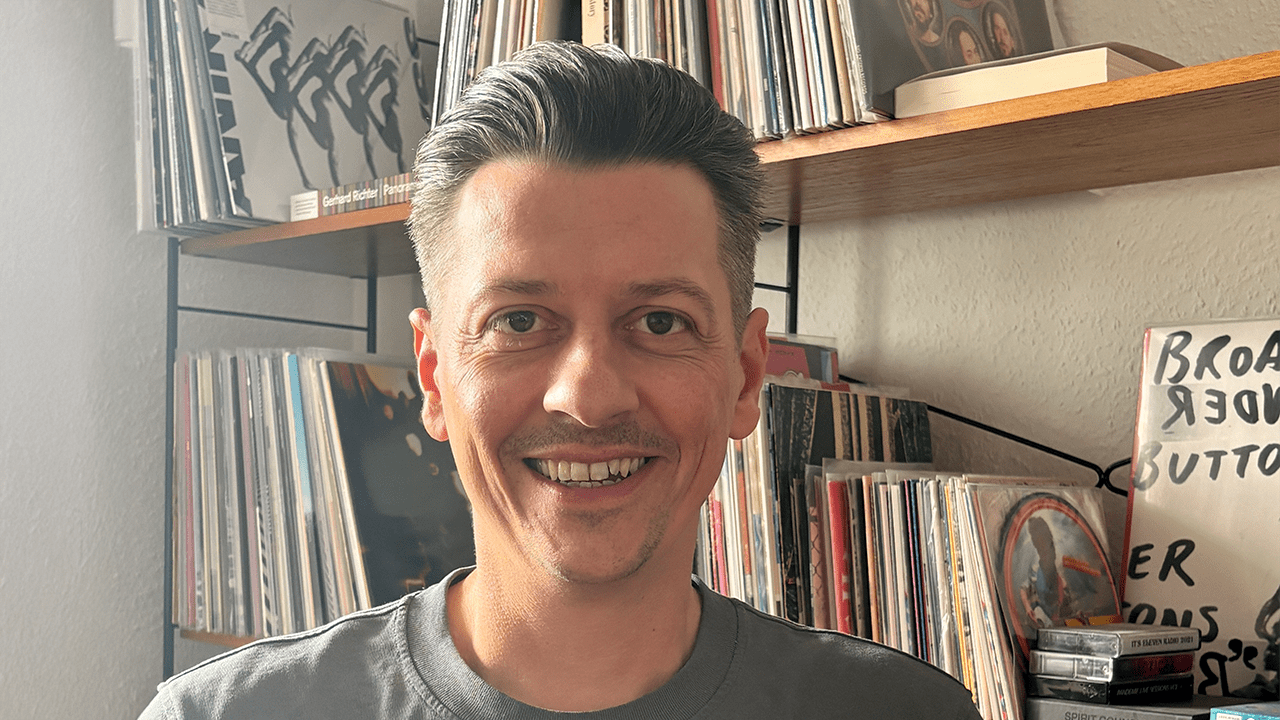
Job of the month #28: International Neighbouring Rights Collection
Each month, IDOL presents a job in the music industry. Or more than a job, a person! Because behind the same job title, there are significant differences from one structure to another. Each person can define the scope of his or her job according to his or her career path, qualities and skills! Meet Alexander Warnke, who shares how as an artist he developed an interest in neighbouring rights and decided to launch his own agency to raise awareness about this revenue stream that many artists overlook.
First and foremost, can you present p.r.o agency?
We’re working with about 70 collection societies worldwide to collect neighbouring rights, nationally and internationally, for artists and record labels. That allows us to register our clients’ repertoire locally and make sure everything is properly accounted for.
This is a very specific niche. The potential of neighbouring rights was underestimated until recently. As traditional revenue streams like physical sales decline, artists and labels are paying closer attention. It’s an important source of meaningful revenue, even if it’s smaller than copyright income.
We still see a lot of unclaimed royalties, called black box money. In Germany, on the artist’s side only, there used to be tens of millions of euros of unclaimed income every year. That’s what keeps us motivated, making sure the money ends up where it belongs.
This is why I prioritize awareness through teaching and webinars. Neighbouring rights exist by law in most countries; you don’t have to pay to register with a society. If you don’t claim this money, it is simply redistributed among other members.
Can you explain neighbouring rights?
You have two main elements: the idea and the recording. The idea covers the composition and the lyrics: that’s copyright. When it comes to the recording, that’s what we call secondary exploitation.
The main sources of income are broadcasting – when a recording is played on TV, radio, or web radio – and public performance, meaning when it’s used in shops, bars, or clubs. Another significant source is the private copying levy, which compensates rightsholders because consumers are allowed to make a private copy on their own storage devices. In Germany, this makes up about one third of all neighbouring rights income.
The key thing to remember is that neighbouring rights always concern the use of recordings, not live concerts. But if a show is recorded and broadcasted, for example on Arte Concert, that broadcast generates neighbouring rights income.
Can you tell us a little about your career path?
Initially I came into the music industry as a musician, back in the late nineties. We quickly realized we needed some structure but we were living in a small village with no real network. Since we couldn’t find a label, a friend and I decided to start one ourselves.
Then we created a small, mostly symbolic distributor, mainly for the name and stamp on the records. From there, we started doing some promotion, organizing label events, and some booking. It was an important phase for me, because it helped us grow our network.
At some point, I had to face the reality that our music wasn’t meant for commercial success. So I decided to study media management at university to better understand the music business. I already had experience, but the whole rights collection process was a confusing and frustrating mystery. Our partners couldn’t really explain how it worked, probably because they didn’t fully understand it either.
Later, the band signed with Cargo Records. That’s where I met Michael Schuster, who now run p.r.o agency with me. I was trying to develop a publishing branch at Cargo, while in parallel I was starting to look deeper into neighbouring rights. So we built up the publishing and neighbouring rights department at Cargo Records, and from there, we founded p.r.o. agency.
Can you explain a little bit what GVL is?
GVL is a collecting society for recordings. A recording always involves two parties: the performing artist and the record label, which usually owns the master rights.
Initially, if you record yourself, you own both: you are the performing artist and the master owner. When you sign with a label, you transfer the master rights. From that moment, the neighbouring rights are split : 50% to the label as the master owner, and 50% to you as the performer.
GVL issues a collective or blanket license, which allows German broadcasters to play any repertoire. To do that legally, the broadcaster signs an agreement with both collecting societies, GEMA for the compositions and lyrics, and GVL for the recordings. Once that’s done, GVL grants the license, and the broadcaster pays fees covering all recorded music they use.
So you were a delegate at GVL in the last five years. What does that imply?
I’m a bit frustrated with how collecting societies operate. From a very early stage, I began challenging GVL and pointing out issues, even filing formal complaints. About 8 years ago, together with the Indie association and other rights holders, we took legal action because they weren’t distributing funds on time and kept missing international deadlines. There were a lot of questionable things happening behind the scenes, even on a political level.
We launched a public petition, Fair Change GVL, and collected over two thousand signatures from prominent actors, artists, and labels. The idea was to push them to change and hold them accountable.
Afterwards, I ran for a seat on the board to advocate for change from within. I was more or less the only independent representative on the delegate board. It was a strange experience at first: sometimes people would literally stop talking when I entered a meeting. But I stayed focused, knowing our agenda and insight into how other collecting societies function internationally.
Looking back, GVL has become much more open and supportive of its members. They’re really trying to help artists access their money. Before, the redistribution of unclaimed money disproportionately favored big players, leaving smaller artists with almost nothing. That’s why I stayed on the delegate board for five years, and though there’s still progress to make, I’ve seen real improvements.
Are you also involved with VUT? Can you explain a bit as well?
My partner Michael was one of the founding members of VUT. Early on, I realized that to make real changes in the industry, we had to organize. In 2016, I helped found VUT East, one of the regional divisions.
This year, I joined VUT’s board, focusing on political advocacy. I’ve seen that independents often struggle with organization, and many are hesitant to engage in complex discussions with policymakers. Thanks to my experience in rights collection, I feel confident bringing new ideas to the table.
With big issues like streaming payments and market consolidation, the pressure on independents is greater than ever. That’s why having diverse perspectives and better organization is so important.
What are the qualities required for your position?
I’d say attention to detail is really important, maybe even more than Excel skills. Haha. You definitely need persistence and tenacity to chase down information, stay on top of details, and make sure everything is checked and correct.
But it also requires a genuine passion for music. You should always remember why you do it. Knowing your work directly helps artists and labels gives deeper meaning to even the most meticulous tasks.
When we started p.r.o agency, our goal was to offer something clearer and more transparent than what I had experienced before. I actually enjoy being behind the scenes, acting as some sort of “tax advisor”. It’s a little bit like a Robin Hood moment sometimes facing these big and powerful societies, and the system can feel complicated. Unlocking that money for the right people is incredibly rewarding.
So what is your connection with IDOL?
It’s actually kind of funny how it all started. There was this connection with Sylvain Morton, your Head of Distribution, back when he was working at Differ-Ant, Cargo Records’ partner distributor. When Sylvain moved to IDOL, I kept running into him at conferences because he was always there, really out and about, promoting what IDOL had to offer.
We don’t work together directly, but we share a real love of music and always have great conversations. He’s just a genuinely nice person. And IDOL has always stood out to me as a really positive, independent distributor.
The second connection was when Marit Posch started managing the IDOL German bureau. She’s actually a friend of mine, so that made it all even more positive. These links keep popping up, making the industry feel like a small world.
What is the strangest task you've done in your career?
When I started in publishing, I briefly worked at a promo agency in Leipzig, which handled campaigns for Sony and others, but I found it really uncomfortable. Honestly, it was a nightmare for me.
My friend Alex thrived in that environment, but for me, promoting music by trying to convince people just didn’t feel right. To me, music speaks for itself: if it’s good, you don’t need to explain, just listen. After a few months, even Alex agreed the job wasn’t a fit for me.
I’ve learned that not everyone is suited for every role. What I am good at is selling something I truly believe in. If I’m not convinced of the quality, I just can’t do it. So, I’m probably not a salesperson in the traditional sense.
Alexander's playlist
Going further
- Job of the Month #1: DSP Editorial & Partnerships Manager
- Job of the Month #2: Front-End developer
- Job of the Month #3: Head of Digital Content Operations
- Job of the Month #4 Label Manager
- Job of the Month #5: Royalties Manager
- Job of the Month #6: Head of Audience Development
- Job of the Month #7: Press Officer
- Job of the Month #8: Head of A&R / Business Development
- Job of the Month #9: Performance Marketing Manager
- Job of the Month #10: Legal Advisor
- Job of the Month #11: General Delegate
- Job of the Month #12: Global Music Editor
- Job of the Month #13: Director of Member Operations
- Job of the Month #14: Backend developer
- Job of the Month #15: President and managing director
- Job of the Month #16: Head of Partnerships
- Job of the Month #17 : Head Of Sacem Lab / Innovation
- Job of the Month #18: Physical Distributor
- Job of the Month #19: Label Partner Manager
- Job of the Month #20: Entrepreneur music & tech
- Job of the Month #21: HR & admin manager
- Job of the Month #22: Membership Director
- Job of the Month #23: Community & Projects Manager
- Job of the Month #24: Artist Strategy Manager (Marketing Lead)
- Job of the month #25: Majeur·e·s Coordinator
- Job of the month #26: Artistic Director in publishing
- Job of the month #27: Serial Entrepreneuse