Job of the Month #31: EDI and research consultant
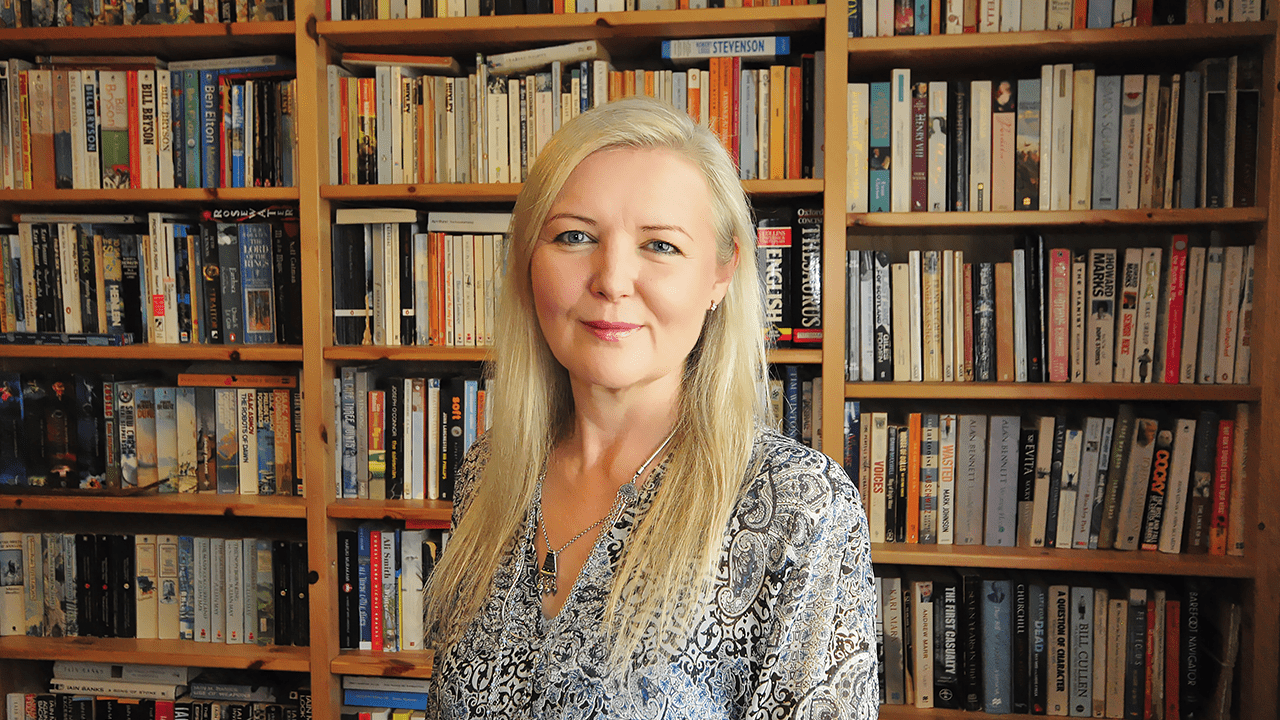
Each month, IDOL presents a job in the music industry. Or more than a job, a person! Because behind the same job title, there are significant differences from one structure to another. Each person can define the scope of his or her job according to his or her career path, qualities and skills! Meet Vick Bain, EDI (equality, diversity and inclusion) and research consultant, who works to improve conditions in the music industry and to support women’s careers through research, training and advocacy.
What does an EDI and Research Consultant do?
This work is very varied and depends a lot on the company, because each one has different needs. I work exclusively in the music sector. Some organisations commission me to carry out research projects, and I have led several studies in this field. Most recently, I was part of a team of researchers working for UK Music on a major report on the value of Black music in the UK (Black Music Means Business), a very specific project that took two years to complete.
Sometimes I am brought in to deliver a single training session, sometimes a whole series. For instance, I have developed full programmes to reduce bias in music competitions. I work with companies that run competitions or want to debias their processes, and I train judging panels on how to reduce unconscious bias. Sometimes the focus is on dealing with harassment and discrimination. That is a tough topic, and I have gone into companies that are handling complaints, which can be challenging, while others prefer to be more proactive.
A lot of my training is what I call “the foundation”: making sure that staff know their rights and that management and leadership know their responsibilities. I have been working on and off for five or six years now with IMPALA, the European trade organisation representing independent labels, and I developed an online training platform funded by them. Anyone in music can go to my website and take these courses. At the moment I have five courses and I will be developing more over the summer.
They are very focused on music: all the case studies and examples come from the sector. People can follow short micro training sessions on topics such as unconscious bias, knowing your rights, basic language and terminology, intersectionality and related concepts and themes. I have been doing this full time for seven years now, after many more years in music, and I still learn something new every day.
What are the qualities required for your position?
I would say you need a very strong sense of social justice, and an openness to being what people might call “woke.” You also need a lot of humility. Over the past seven years, I have gone through my own process of really examining my biases, many of which come from who I am and where I grew up, and of acknowledging my privileges as a white person living in the UK.
Humility also goes hand in hand with persistence. I am in the final year of a PhD on women’s careers in the UK music industry. I have been working on it for six years, and it has been incredibly helpful for my consultancy and practice. But to reach that level of research, especially going back to university later in life as an older woman, you have to be very determined.
Can you tell us a little about your career path?
I am studying career pathways, so it is something I have really reflected on. Most careers in music follow very wiggly lines. I did not plan this 30 years ago, but as a teenager I knew I wanted to work in music, even if I did not yet know how. I trained first as a musician and did several higher education qualifications in music as a singer, but I was also drawn to the management and business side. When it became clear I was not going to earn enough as a musician, certainly not enough to pay my rent in London, I moved into the business side, and that suited me very well.
In 2005, I started working for an organisation then called the British Academy of Songwriters, Composers and Authors, which owned the Ivor Novello Awards and now trades as The Ivors Academy. When I saw the job advert, I was very excited because I knew the prestigious reputation of The Ivors. I quickly realised it was a campaigning organisation, and that really spoke to my values. It fought to ensure that songwriters and composers were paid properly, were protected, and that intellectual property laws supported music creators, who are the foundation of the music industry. I loved that sense of doing the right thing.
My experience there also opened my eyes to how male dominated the environment was. I would look around the room and see it very clearly. In 2016, after I had been promoted to CEO, I carried out an analysis of 60 years of Ivors winners. Only 6% of awards had gone to women. That was a shocking discovery. In the 1990s, and between 2010 and 2016, the figure had only reached 10%. It has increased over the past ten years, but not dramatically.
At that point I thought, we have to do more to get women into songwriting and composing. I realised that this was my real passion and that it would become my calling. That is why, in 2018, I decided to step away from that role and focus fully on this mission.
How is your daily work organized?
I do three main things. I work as a consultant for organisations, which is how I pay my bills. I pursue my PhD research, which costs me money but is the foundation for everything else I do. And I am also involved in not for profit work.
During lockdown, I set up a not for profit that grew far beyond a simple side project. It is called The F–List for Music, and it supports women and gender diverse musicians. I work with a fantastic board of women, and with charity funding we run artist development programmes, training, information and more, as well as a directory of around 6 500 musicians and bands that include women. Companies can also create their own listings on The F–List if they want to highlight the women on their rosters. It is currently UK based only, simply because there would not be enough hours in the day for me to manage a global directory, although I know of and stay in touch with similar initiatives in other countries.
That is what I do in my so-called spare time, alongside trying to write up my PhD. I juggle these three strands every day.
What do you like about your job?
All of this work gives me a great deal of satisfaction. I love the people I work with, because the companies I support want to improve and share my values, which is crucial for me. The women I work with at The F–List are fantastic, and we have built strong friendships around a shared mission. My PhD is a real challenge and it is very hard work, but I am passionate about it and I believe it will help us understand what needs to change in the music industry and how to make that change happen. I feel very satisfied with what I do, and I think that is essential in any job.
I have also done some teaching, mainly as a guest lecturer at around 20 UK universities. Often they invite me to speak about women in music, but I also teach general music business, because understanding how the music industry works is vital for anyone who wants to be part of it, given how complex it is. Looking ahead, I simply hope to carry on this work, and, with a bit of luck, to have a PhD certificate at the end of seven years of study to show for it.
How did you get involved with the Independent Society of Musicians, and what is your role there?
I left The Ivors at the very end of 2018, but I was already a member of the ISM. About five years ago, they asked if I would be interested in applying for a board director position, so I did, and I believe this is my last year in that role.
The ISM is another membership organisation that campaigns, which really speaks to my values of wanting to make the music industry better for musicians and for professionals working in music. There is a lot of campaigning around AI at the moment, and a strong focus on making sure conditions are as good as possible for musicians. They have also carried out research on discrimination and harassment, and I contributed as a writer on their most recent report.
What is the strangest task you've done in your career?
I thought about it and, honestly, I do not feel I have done anything particularly strange in my professional career. But I did have a student job that I love telling people about, because it always surprises them.
One year I worked as a clown, selling balloons and doing face painting, and I absolutely loved it. It was hilarious and really fun, because you put on this crazy mask, which is very different from how I usually present myself, and it gives you permission to be silly.
That was a long time ago now, but I still have some very funny photos. It is always the story I share that nobody ever guesses. I am not sure it was strange, but it was definitely fun
In your view, what progress has the music industry made and where do we still need to do better?
I think the music industry still has a lot of soul searching to do about how far we have yet to go. There have been improvements in some areas, but there are many others where we clearly need to do better.
We need more acknowledgement, a better understanding of the data, and a clearer view of where change is needed. If more people took my online training, that would already be a meaningful step towards accelerating progress. Things are moving, but I believe we could move faster.
Vick's playlist
Going further
- Job of the Month #1: DSP Editorial & Partnerships Manager
- Job of the Month #2: Front-End developer
- Job of the Month #3: Head of Digital Content Operations
- Job of the Month #4 Label Manager
- Job of the Month #5: Royalties Manager
- Job of the Month #6: Head of Audience Development
- Job of the Month #7: Press Officer
- Job of the Month #8: Head of A&R / Business Development
- Job of the Month #9: Performance Marketing Manager
- Job of the Month #10: Legal Advisor
- Job of the Month #11: General Delegate
- Job of the Month #12: Global Music Editor
- Job of the Month #13: Director of Member Operations
- Job of the Month #14: Backend developer
- Job of the Month #15: President and managing director
- Job of the Month #16: Head of Partnerships
- Job of the Month #17: Head Of Sacem Lab / Innovation
- Job of the Month #18: Physical Distributor
- Job of the Month #19: Label Partner Manager
- Job of the Month #20: Entrepreneur music & tech
- Job of the Month #21: HR & admin manager
- Job of the Month #22: Membership Director
- Job of the Month #23: Community & Projects Manager
- Job of the Month #24: Artist Strategy Manager (Marketing Lead)
- Job of the month #25: Majeur·e·s Coordinator
- Job of the month #26: Artistic Director in publishing
- Job of the month #27: Serial Entrepreneuse
- Job of the month #28: International Neighbouring Rights Collection
- Job of the Month #29: Director of Insights
- Job of the Month #30: Music Supervisor
- Job of the Month #32: Strategic Advisor
- Job of the Month #33: Project manager and Chairwoman