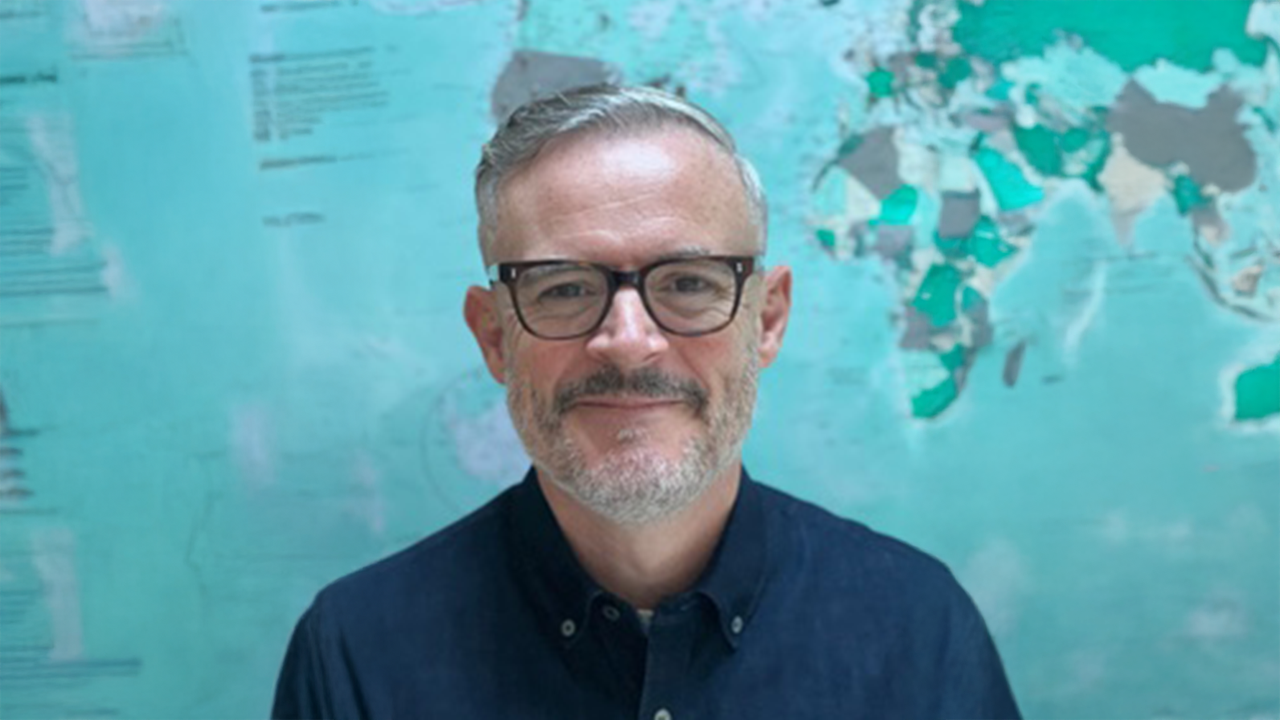
Job of the Month #32: Strategic Advisor
Each month, IDOL presents a job in the music industry. Or more than a job, a person! Because behind the same job title, there are significant differences from one structure to another. Each person can define the scope of his or her job according to his or her career path, qualities and skills! Meet Patrick Clifton, Strategic Advisor, whose career spans a wide range of environments from Jive to Cantilever to Amazon. Today, he brings this experience to his new role as Executive Director of the Organization for Recorded Culture and Arts (ORCA).
First of all, can you explain what ORCA is?
ORCA is a think tank and advocacy group set up by some of the world’s leading independent record labels, with a mission to promote the economic, social and cultural value of music. It is about two and a half years old, and I have been working with it for around a year now.
I think it really came out of a shared frustration among the founding supporters about how record labels are perceived, and a lack of understanding of the value they bring to music and culture. A lot of that built up around COVID, especially with the debate around artist earnings and the idea that all labels are somehow exploiting artists. In reality, these are businesses built on long term investment in, and relationships with artists, so that narrative does not really hold up.
There was also very little distinction being made between different types of labels, even though majors and independents operate very differently. And then you had the rise of direct artist deals and service companies, which added to the confusion around what labels actually do.
All of this, ultimately, risks undervaluing the role independent labels play in supporting artists, their music and driving culture forward.
What does a Strategic Advisor do?
I have had a fairly long career, and, like a lot of people in music, I think progression comes mainly through experience. It is not really a field where you learn everything in a formal way. You build knowledge by doing, by working on different projects, releasing records, and being involved in lots of things over time.
Over the years, you start to understand how all the pieces fit together. And having lived through major shifts in the industry, the decline of the CD, the rise of digital, the growth of streaming, and the disruption of COVID, it helps you see both the bigger picture and how change affects the business.
That is what gradually moves your thinking from a tactical level to a more strategic one. You start thinking about where a business or project should be in two or five years, and how to get there. As a strategic advisor, your job is to help shape that path.
Can you tell us a little about your career path?
When I left university, I did not really know exactly what I wanted to do, but I was very passionate about music. I was a student DJ, I collected records, and my brothers encouraged me to get into the industry, saying I would probably be good at it.
I met a few people and started out in very basic entry level jobs. My first real role was in publicity at Jive Records, which was a major independent label at the time. After that, I spent a couple of years at The End, a cutting edge nightclub that helped shape the blueprint for clubs like Fabric and Plastic People. That was a hugely formative period, both in terms of seeing how music connects with people and learning the discipline of putting on events every week.
Then I joined the label Independiente, where I worked for six years, first building their dance music function and later moving into indie and rock marketing. We had some major successes there, including The Supermen Lovers and So Solid Crew.
As the industry changed at the turn of the century, I left in 2006, set up a consultancy, and later set up an agency with a PR company focused on social media strategy, right at the beginning of Facebook. After a difficult period during the credit crunch, I went to the US to pursue a master’s degree, thinking I might leave music behind.
But music pulled me back in. I joined Amazon in the UK, first in social media marketing, then in digital music. When Amazon launched its streaming service, I led that project, and my role grew with the business. I worked on the launch of Prime Music, Amazon Music Unlimited, led industry relations, originals, established artist marketing, and eventually led the combined physical and digital music business in the UK.
After ten years there, I wanted to come back to something more independent, closer to my roots. Since then, I have been consulting, working with music and tech clients on strategy. More recently, I have been advising Cantilever and supporting the independent community through ORCA.
What are the qualities required for your position?
I would say experience, an open mind to change, quite a broad set of understanding and knowledge of different aspects of the industry. The fact that I’ve worked in tech and music on both sides is very helpful in the particular kind of world that we live in today.
How is your daily work organized?
It really depends. When you are consulting for different clients, no two weeks are ever the same. In the early stages, I could have two months of work, then a month with nothing, sometimes even two months with nothing, and that is tough. So you have to keep a routine, whether a project is on or off, and make sure you are still doing something that feels useful.
One thing I have done is write on Substack and Medium. When things are quieter, I can spend proper time on that, and it has been genuinely valuable, both as a creative outlet and as a way of finding new work.
At the moment, my week is split between running the ORCA company and developing research. That means meeting researchers, doing my own work on music industry trends, and really listening to supporters’ concerns, interests and values. Some of those views are strongly political or ethical, and you have to take them seriously.
I also spend time writing reports. Right now, I am working on one about the physical music ecosystem, so I am speaking to a lot of different stakeholders to build the knowledge base.
On top of that, I help manage our communication channels, including Substack and social media, and I am still advising Cantilever whenever I can.
What do you enjoy about your job?
I work with some really interesting people, and I have a lot of respect for them. That matters a great deal. Coming from outside, especially after spending time in a big corporation, you often hear a lot about ethics, but it can feel a bit hollow. Here at ORCA, the values are real. A lot of the people involved are genuinely values driven, and that makes a big difference.
After ten years in that other environment, being in a space that feels much more authentic means a lot to me. I really enjoy the work, too. We believe independent music and independent record labels have real value for culture and for people, because they help bring great music into the world. Being able to contribute to that, even in a small way, is very rewarding.
And although this is not a business in the traditional sense, there is still something entrepreneurial about it. ORCA is a new organisation, and I am helping to build awareness, shape its brand, and give it a voice in the world. That also ticks one of the boxes for me in terms of personal satisfaction.
What is your connection with IDOL?
At Amazon, I saw IDOL’s growth happening and followed it with interest. I know Roo Currier, UK General Manager for IDOL, quite well. After Amazon, I went to work for The Vinyl Factory, and IDOL distributed some of their releases, so that is actually how I first met him.
I even remember being invited to a party in Paris when I was at Vinyl Factory and being really annoyed that I could not go. It was on a boat, which sounded amazing.
I grew up in Brussels, so I am bilingual francophone, and as a kid used to spend every summer in France. So I am a Francophile: I really enjoy working with French people and French businesses.
I am a big admirer of IDOL – City Slang, one of ORCA’s founders, are a client and I admire them very much as well . Christoph Ellinghaus is one of our founding supporters, and part of the IDOL family. City Slang is an incredible label, with a catalogue full of great records.
What's the strangest task you've ever done in your career?
The weirdest one was probably when I was working for Independiente. We had an international distribution deal with Sony, and part of the agreement was that we had to deliver 12 albums every year to keep the contract and secure the funding Sony was putting into the label.
The catch was that those 12 albums had to be delivered by a fixed date, and delivering an album meant having both the master and the artwork ready. This was around 2000 or 2001, so there was no digital file transfer, no FTP, nothing like that. Everything was still very analog, and apart from CDs, it was all extremely manual.
I had to fly to New York, take the first flight at around 7 a.m., get picked up by car, and spend the day driving around the city to collect negatives and prints from a photo shoot for three album covers. Then I went straight back to the airport, flew back to Heathrow, and by then I had been awake for about 24 hours. Luckily, I was 27, so I had the energy for it, and it all worked out.
When I got home, I still had to take another taxi to a graphic designer’s place so they could use the material and finish the artwork in time. That was pretty weird.
Patrick's playlist
Going further
- Job of the Month #1: DSP Editorial & Partnerships Manager
- Job of the Month #2: Front-End developer
- Job of the Month #3: Head of Digital Content Operations
- Job of the Month #4 Label Manager
- Job of the Month #5: Royalties Manager
- Job of the Month #6: Head of Audience Development
- Job of the Month #7: Press Officer
- Job of the Month #8: Head of A&R / Business Development
- Job of the Month #9: Performance Marketing Manager
- Job of the Month #10: Legal Advisor
- Job of the Month #11: General Delegate
- Job of the Month #12: Global Music Editor
- Job of the Month #13: Director of Member Operations
- Job of the Month #14: Backend developer
- Job of the Month #15: President and managing director
- Job of the Month #16: Head of Partnerships
- Job of the Month #17: Head Of Sacem Lab / Innovation
- Job of the Month #18: Physical Distributor
- Job of the Month #19: Label Partner Manager
- Job of the Month #20: Entrepreneur music & tech
- Job of the Month #21: HR & admin manager
- Job of the Month #22: Membership Director
- Job of the Month #23: Community & Projects Manager
- Job of the Month #24: Artist Strategy Manager (Marketing Lead)
- Job of the month #25: Majeur·e·s Coordinator
- Job of the month #26: Artistic Director in publishing
- Job of the month #27: Serial Entrepreneuse
- Job of the month #28: International Neighbouring Rights Collection
- Job of the Month #29: Director of Insights
- Job of the Month #30: Music Supervisor
- Job of the Month #31: EDI and research consultant